I am about to condemn an act that I have perhaps, committed several times myself without even knowing that I was. For instance, on my first visit to the United Kingdom about a decade and half ago, I was shocked to see that instead of vehicles moving on the right hand side of the road as I was used to seeing in my homeland, the vehicles were moving on the left hand side of the road. Well, today I use the term “left hand side” but on that occasion, I asked my cousin who had picked me up from the airport why the British were driving on the “wrong side” of the road. Today, when I reflect on what I said back then, I feel a little embarrassed. I was judging the driving values of the British based on the driving values in Ghana. That was wrong of me.
Not too long ago, a non- Muslim friend of mine asked to know if I could read Arabic. I responded in the affirmative, almost without pausing to think, he quickly asked again “is it true that Arabic is read backward? Why did he not just say “from right to left” or “in the opposite direction from English? As I sat watching the news on TV in the company of some friends, a news story that depicted some cultural dances among the Wala people of the Upper West Region was shown. One of the dancers was wielding a wooden model of a gun and would pretend to shoot into the air. One of my friends remarked “as for these people, everything they do is about fighting”. I had to remind my good friend that in the over 4 years that we had been friends, I had never, not once, had a fight with him or any other person. On the other hand, there were countless occasions when I had to broker peace between him and many others who were engaged in fights. I reminded my friend that I was a Wala from the Upper West Region, yet nothing I do is about fighting.
At a workshop for media persons in Akosombo a few years ago, one of my colleagues in the media became the “laughing stock” because he spoke English in “a certain way”. We all speak English in “a certain way,” don’t we? Why was his way of speaking English funny to the rest of us? What is it that made the others at the workshop believe that their “way” of speaking the English language was better than his? It was ethnocentrism.
All too often, I have heard people make such derogatory comments as Ewes are wicked, Gas are noisy, Northerners are violent, Fantes are jokers Ashantis are proud, Akyems are litigants and many others. These are the hidden traits in almost all of us that lead to ethnocentrism. Ethnocentrism leads us to make false assumptions about cultural differences. We are ethnocentric when we use our cultural norms to make generalizations about other peoples’ cultures and customs. Such generalizations -often made without a conscious awareness that we’ve used our culture as a universal yardstick - can be way off-base and cause us to misjudge other people. Ethnocentrism can lead to cultural misinterpretation and it often distorts communication between human beings.
Africa has played scene to many of these ethnic uprisings and genocide. Memories left behind by the horror of these ethnic conflicts Burundi, Rwanda, the Konkomba-Nanumba conflict, Nkonya- Alavanyo conflict and elsewhere are still fresh in our memories. On occasions when the conflict is not centered on ethnicity, it narrows down to tribalism. Last year, I visited war-torn Somalia, where I saw a country that has been brought down to its knees because of tribalism, where there are first class citizens and “the rest”. I witness how conflict among clans of the same ethnic groups in Somalia has killed a whole nation and destroyed the future of more than two generations of its citizens.
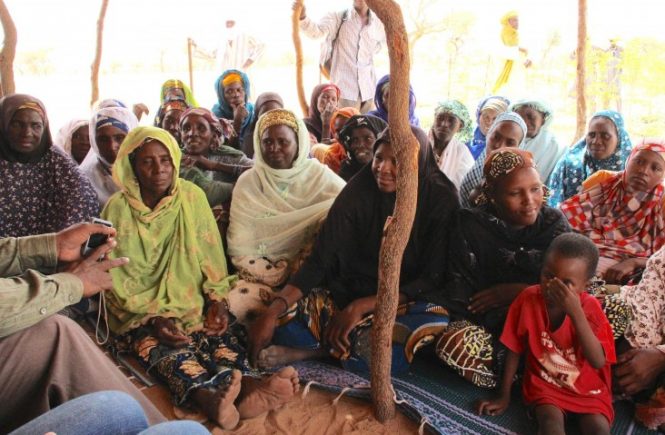
Each of the over 40 ethnic and linguistic groups in Ghana is seeking self-determination and cultural identity. And in dealing with people with different cultural identities, one must be careful not to hurt their sensitivities. The recent comments by a Deputy Minister of State which sought to paint all persons from the Northern part of the country with one brush as “difficult” people who double as “liars” seeking to “extort” money from the government, was received with unanimous anger by persons who come from the three regions in the north of Ghana. Subsequently, the out-pour of anger and protestations on social media against the then Deputy Minister led to his resignation.
The disease of ethnocentrism is a scourge that we must get rid of. If we do not get rid of it, it will get rid of us. It has so permeated our political space, so much so that, after loyalty to a political party, qualification for appointment to political office largely depends on whether or not your ethnic affiliation is friendly to the governing party. As a country, we do not need ethnic groups in government, we need competent people in government.
At the heart of many ethnic conflicts lie issues that have given rise to discontentment, key among which include economic disparity, competition for material resources, over-centralization, exclusive appropriation of resources of a country by a dominant ethnic group, weak political structures and bad governance.
Beyond these, we can all begin to adopt some very basic habits that can help us to overcome ethnocentrism. A good starting point will be to avoid assumptions. We should always remember that people from different cultures would have other customs, beliefs, values or traditions that we should respect. Secondly, we must learn about other cultures. When you keep an open mind to new or different things it’s easy to learn and appreciate cultural diversity.
The other step towards the fight against ethnocentrism is to avoid judging others. When people around you act differently, do not assume they are making a mistake. Learn to appreciate differences. Finally, we must learn to respect others. Keep in mind the golden rule. “Treat people the way you want to be treated” The menace of ethnocentrism around the world could be avoided if we follow these basic principles.
Say no to ethnocentrism
About the Writer
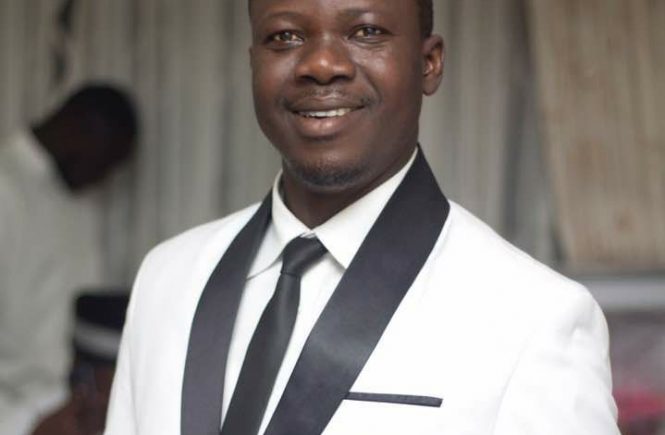
Abdul Hayi Moomen is a broadcast journalist and news editor at the Ghana Broadcasting Corporation. He is the host of Moomen Tonight on GBC 24.